Monthly Archives: March 2023

Tough times result in swing towards brokers: Vero SME Index

Tough times result in swing towards brokers: Vero SME Index

Broker satisfaction levels remain high and there may be a shift toward seeking the advice of intermediaries amid difficult economic conditions, the latest Vero SME Insurance Index shows.

Some 78% of clients are satisfied with their broker, with the percentage holding well above pre-pandemic levels of 66% in 2019, while easing from a covid-attributed spike to 84% in the previous survey.

The annual survey shows 61% of respondents use a mix of channels to purchase insurance, up from 54% a year earlier, with the increase driven by a reduction in those who bought entirely through direct channels. The percentage of “heavy broker users” held steady.

Some 62% of direct buyers said they would consider using a broker in the future, up from 50% last year and 41% in 2019.

The findings shows that 68% of broker clients are satisfied with their claims experiences, a 20 percentage point higher result compared to those who buy their insurance direct.

“We know mixed usage is here to stay, but there appears to be some signs there that non-users are increasingly considering broker usage,” Vero Head of Distribution Anthony Pagano says.

“In an uncertain and challenging environment, it’s understandable that clients might be looking for additional support with these important business decisions.”

Mr Pagano says the survey highlights the pressures that broker clients are under, with 61% of respondents nominating economic concerns as a worry. Two thirds of businesses reported that they are experiencing major or moderate impacts from inflation and over half are being impacted by supply cost increases.

The survey finds that 61% of businesses are planning changes in the next year, but 41% admit insurance is the last thing they consider when making changes.

Trust in brokers held stable amid a period that has included record flooding and repeated natural catastrophes, as well as economic volatility. The survey finding 31% of SMEs agree with the statement that “at the end of the day, you can’t trust insurance brokers”, consistent with the previous year.

The level of respondents who agreed that you can’t trust insurance companies increased to 37% from 33%, while 48% agreed that recent events have made them more wary of the industry, up from 41% previously.

The Vero SME Insurance Index report is based on research involving owners and insurance decision makers at 1500 SMEs and 250 large businesses, covering a range of enterprise types and locations. The survey is conducted by BrandMatters.

Vero will provide further updates from the index over coming months covering Environmental, Social and Governance (ESG) issues, natural disasters and employee concerns.


Resource:

Insurance News – 13/03/2023
 

PERILS unveils final insurance loss estimate for 2022 Eastern Australia floods

PERILS unveils final insurance loss estimate for 2022 Eastern Australia floods

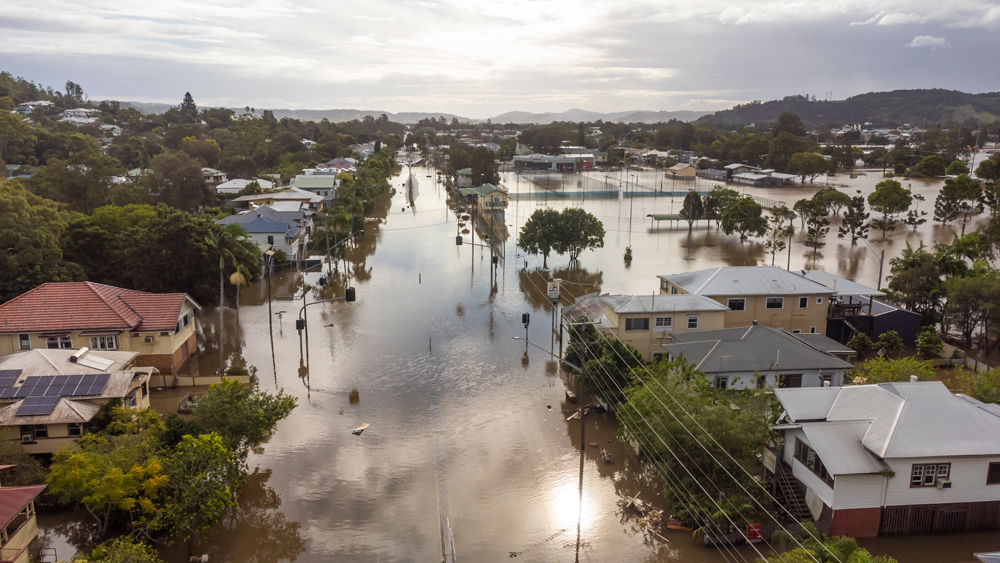
PERILS, which provides industry-wide catastrophe insurance data, has released its final insurance industry loss report for the February-March 2022 Eastern Australia floods.

The report revealed that the final insurance market loss estimate is A$6,527 million, up from the A$6,292 million estimated by PERILS on September 13, 2022. The latest figure covers the motor and property lines of business, accounting for 9.5% and 90.5%, respectively, of the total industry loss.

The final report provides a comprehensive breakdown of motor and property losses by postcode. The data is further divided by residential and commercial lines and provides loss amounts split into buildings, contents, and business interruption losses where available. It is complemented by postcode-level rain accumulation data from the Australian Bureau of Meteorology.

Australia’s costliest flood

From February 20 to March 11, 2022, Eastern Australia experienced an extended period of heavy rainfall in major river-and-surface-water flooding. The event mainly affected Southeast Queensland (QLD), the north-eastern tip of New South Wales (NSW) and the NSW Central Coast, including the surrounding areas of metropolitan Sydney.

The event has been deemed Australia’s costliest flood and one of the world’s worst losses outside the US in 2022.

Darryl Pidcock, head of PERILS Asia-Pacific, said PERILS’ detailed loss and industry exposure data aims to contribute to industry efforts to manage flood risk and boost the resilience of the Australian economy and society to natural catastrophes.

“The East Coast of Australia has experienced several major storm and flood events during the last three summers driven by persistent La Nina conditions. While current forecasts indicate this will weaken to more normal levels, La Nina has caused the largest industry event loss in Australian history,” Pidcock said. “Despite the challenges faced by our insurance partners in dealing with these Cat events, they continue to support our efforts, for which we are extremely grateful and remain committed to providing value in return.”

PERILS CEO Luzi Hitz commented: “Reliable, systematic data is the foundation of effective risk assessment. Without it, the re/insurance industry is significantly exposed to unexpected losses and dislocation. Making such data available to enable a better understanding of natural catastrophe risk was one of the key drivers behind the launch of PERILS some 14 years ago. Every Cat event further elevates our value proposition, and as the effects of climate change become more visible, this will continue for the foreseeable future.”


Resource:

Insurance Business Australia – 14/03/2023


E-scooter workers’ comp claims have tripled – RACQ

E-scooter workers’ comp claims have tripled – RACQ

RACQ has urged electric scooter (e-scooter) riders to take their time when going to work as new data has revealed that more crashes occur on the morning commute than on the way home. It also found that workers’ compensation claims from e-scooter incidents have tripled over the past three years.

The data is part of an e-scooter injury research project funded by RACQ and the RBWH Foundation through the Jamieson Trauma Institute (JTI).

It showed that 36% of e-scooter crashes occur on the way to work, while 29% occur on the way home. Moreover, Tuesdays are the most common day for an e-scooter crash.

“More and more people are using e-scooters as part of their daily commute, and while they’re a great mode of transport, people need to remember how dangerous they can be,” said principal technical researcher Andrew Kirk. “We all know how easy it is to run out of time in the morning, and we’re often scrambling to get into the office or wherever we may need to be.”

“Make sure you’re allowing extra time for your commute or accept that it’s better to be a couple of minutes late than seriously injure yourself and end up in the hospital.”

Workers’ compensation claims for e-scooter crashes

The data showed workers’ compensation claims for e-scooter crashes had tripled over the past three years.

“There were 421 e-scooter-related workers’ compensation claims made between December 2018 and October 2022,” said JTI researcher professor Kirsten Vallmuur. “An average of almost 16 claims were made every month in 2022, up from less than five per month in 2019.”

The “majority” of claims were made by males, while the most common age group of claimants was 25-to-34 years olds (35%), according to the data. This was followed by 35 to 44-year-olds (26%).

The RBWH Foundation CEO Simone Garske said trauma research funding is crucial to fully inform the community and policymakers about emerging risks, including those posed by e-scooters.

“Thanks to RBWH Foundation donors and our partnership with RACQ, much-needed funding has been provided to researchers so they can review data and compile statistics which provide life-saving insights,” Garske said.


Resource:

Insurance Business Australia – 09/03/2023


Will ChatGPT transform insurance? Insurtechs speak out

Will ChatGPT transform insurance? Insurtechs speak out

Whatever your feelings are about generative artificial intelligence (AI), ChatGPT believes it can positively impact the insurance industry.

The chatbot, which became a global sensation after its launch in November, made a case for itself at a demonstration at the Insurtech Insights Europe conference last week.

Prompted about the benefits it could give to insurance companies, ChatGPT its “knowledge” (based on 175 billion data parameters) and communication skills could assist customers with their insurance queries and help insurers stay on top of emerging trends and customer needs.

A highly intelligent AI language processing tool, ChatGPT sparked feverish debate about its implications for the digital world, even as it gained popularity in various industries such as healthcare and education.

But leaders of insurtech companies, many of which use AI to transform claims, underwriting, distribution, fraud detection and more, are optimistic about the doors that ChatGPT could open.

The combination of AI and a conversational interface could have transformative power for insurance, according to one CEO.

“If you can ask a computer, in natural language, to solve a problem for you, and it can do what you ask it for with a high probability, that’s a game changer,” said Amrit Santhirasenan, co-founder and CEO of hyperexponential.

“Additionally, if you have AI models that have the sophistication and freeform ability to interpret with intelligence, that is also going to have huge leverage. We’ll see practitioners who adopt these technologies really level up.”

What are the pros and cons of ChatGPT for insurance?

It’s unlikely, at its current stage, for generative AI to completely replace underwriters, claims handlers, or customer service representatives, experts said.

ChatGPT itself has a significant list of pitfalls: it can’t grasp context or nuance in human communication, such as sarcasm; it’s limited in its ability to handle multiple tasks; and it doesn’t have enough expertise to draft complex or technical documents, such as policy wordings.

It can also hold biases or prejudices, based on the data that it’s trained on, which opens a Pandora’s box of ethical issues for insurance companies.

The value in generative AI lies in its potential to automate non-core but essential tasks.

“If someone could write the right prompts to an AI, rather than manually format a spreadsheet, they could work in 100th or even a millionth of the time,” Santhirasenan said.

According to Roi Amir, CEO of Sprout.ai, insurance companies could use the underlying technology in to jumpstart their own innovations.

Sprout.ai trained its own AI to handle insurance claims data, boasting its claims automation platform can process most claims within minutes. Amir said other companies will be looking to harness generalized AI for similarly specific applications.

“If you look at many [AI] models today, you know, they are built to be very specific to a problem,” he told Insurance Business. “ChatGPT is a great generalized model. What I think we will see is many companies using it as their baseline model and add layers of intelligence and specificity for their individual domains.

“It will jumpstart a lot of things because it enables you to start from a much better level of abstraction. Smart companies will be leveraging that to solve very, very specific problems.”

Santhirasenan agreed: “If we take these sophisticated AI models and specialize them, we can create ‘supercharged’ versions of AI applications in different sectors [of insurance].”

It could take time, however, for some specialty and commercial lines to find value out of AI models because of lack of data, the CEO acknowledged. But personal lines like home and auto insurance, where there are hundreds of millions of data points already available for AI to leverage, could see astonishing results.

“We’re only at the beginning of this, but we could see some incredible things out of the personal lines spectrum [of business] very quickly,” Santhirasenan added.

Lawrence Buckler, VP of sales at Sprout.ai, pointed out that AI had existed as an invisible lever in insurance for many years, before ChatGPT came to mainstream consciousness.

“ChatGPT made something tangible that had never been tangible to a lot of people before. At Sprout, we’ve been using AI for several years to solve problems that most people don’t see,” he said.

“Now we have customers that are using AI to fully resolve complex data problems very quickly, effectively, and consistently.”

While the evolution of the technology is still unclear, the overnight sensation around generative AI is a boon for insurance companies, noted Bill Brower, VP of industry relations and claims solutions at Solera.

“The biggest thing [ChatGPT] is doing for the insurance industry is that it gets people more and more comfortable with AI capability,” Brower said.

“The more we see consumers adopting AI in other areas of life, the more it’s going to help insurers with [using AI] in their applications.”


Resource:

Insurance Business Australia – 08/03/2023


‘Climate trauma’: Australians battle extreme weather and unaffordable premiums

‘Climate trauma’: Australians battle extreme weather and unaffordable premiums

A new study from the Climate Council details “widespread distress” amongst Australians facing severe weather events and pressure from rising insurance premiums.

The report says soaring prices are “increasing the burden” on policyholders to protect their properties against worsening natural disasters.

Of more than 2000 survey respondents who held insurance plans, 64% reported a rise in their premiums in the last two years, with a majority attributing “climate disasters” as a reason. 6% of respondents said they cancelled their insurance due to the increasing cost.

The report found that about 21% of overall respondents reported having no insurance.

Climate Council Research Director Simon Bradshaw says more Australians are feeling “climate trauma,” with over 80% of respondents saying they experienced a natural disaster within the past five years.

“Decades of scientific research have taught us a lot about the physical risks of climate change, but far less attention has been paid to the impact of climate change on our mental health,” Dr Bradshaw said.

“The results highlight the devastating toll that climate change is having on the mental health of our communities, and uncover many practical steps we should be taking.”

Lismore City Councilor and Resilient Lismore MD Elly Bird says locals are experiencing “a collective trauma” from last year’s floods, with many unable to afford insurance or having claims denied.

“People simply cannot navigate day-to-day. We’re exhausted,” Ms Bird said.

“While we continue to rebuild and may well achieve some type of ‘normal’, it is abundantly clear that the mental health repercussions will be with us for a very long time.

“As a society we need to have serious conversations about the sting in the tail of climate disasters: about the mental health fall out – not just here in Lismore – but all around the country.”

The Climate Council says mental health systems require significant reforms to improve preparation and aid for disaster victims, particularly those in regional communities.

It also calls for the establishment of an independent insurance price monitor and a “comprehensive review of the impact of climate change on the provision of insurance”.

Click here for the report.


Resource:

Insurance News – 01/03/2023